Woodbridge Lock Services
Issue 1 of 3LocksmithVaughan, Ontario
Commercial-Grade Lock Replacement: what the visit covers
Commercial-grade lock replacement swaps hardware that is worn, damaged, mismatched or simply not rated for a business door with hardware built for that duty: a mortise lock body, a heavy cylindrical lockset, or a…
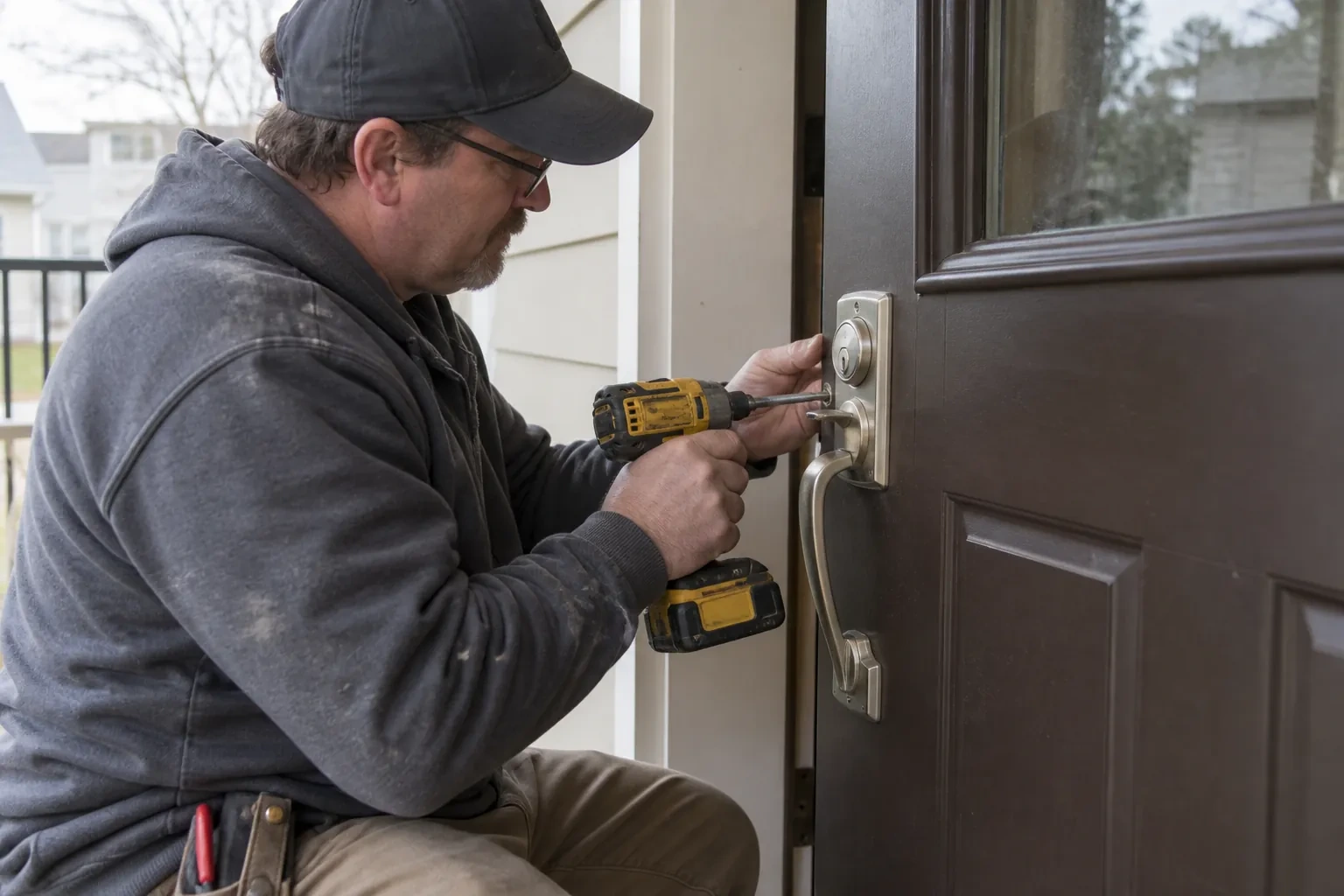
Commercial-grade lock replacement swaps hardware that is worn, damaged, mismatched or simply not rated for a business door with hardware built for that duty: a mortise lock body, a heavy cylindrical lockset, or a narrow-stile lock or hookbolt for an aluminum storefront door. The locksmith reads the door's construction, the traffic the opening takes, and any key or access-control system already running before choosing a replacement. New hardware is keyed into that existing system rather than left to stand on its own, so one business ends up with one coherent set of locks instead of a patchwork of whatever was fitted door by door over the years.
Looking at how the opening is actually used
A door's traffic shapes which hardware belongs on it. A staff entrance opened a handful of times a day tolerates lighter-duty hardware than a delivery door shouldered open on every shift, and a customer-facing storefront door needs a finish and function that hold up under public use. The locksmith asks how often the door opens, who uses it, and whether it is propped, wedged or held open in daily practice, since a door habitually held open needs hardware and a closer arrangement that account for that use rather than fighting it.
Preserving the door's required behaviour
On a door required to close and latch on its own, the new hardware is installed and the closer adjusted so that behaviour still happens after the work is done: the door swings shut, the latch engages, and nothing about the new lock lets it be secured open in daily use. On an exit route where listed push-type hardware is required, the entire route from that door to the outside is checked so the new hardware fits the same standard as the rest of the path rather than becoming the one mismatched link in it.
Ready for the next security decision
With current hardware and an accurate key-control record in place, the business is better positioned for whatever comes next: adding a location to the master key system, upgrading a single door to an interchangeable core so staff can rekey it without a service call, or answering an insurer's or landlord's question about what security is on a given door. None of that requires starting from scratch, because the replacement visit leaves behind hardware and documentation that a future decision can build on directly.